

Breast Health Hub
Be breast care aware!
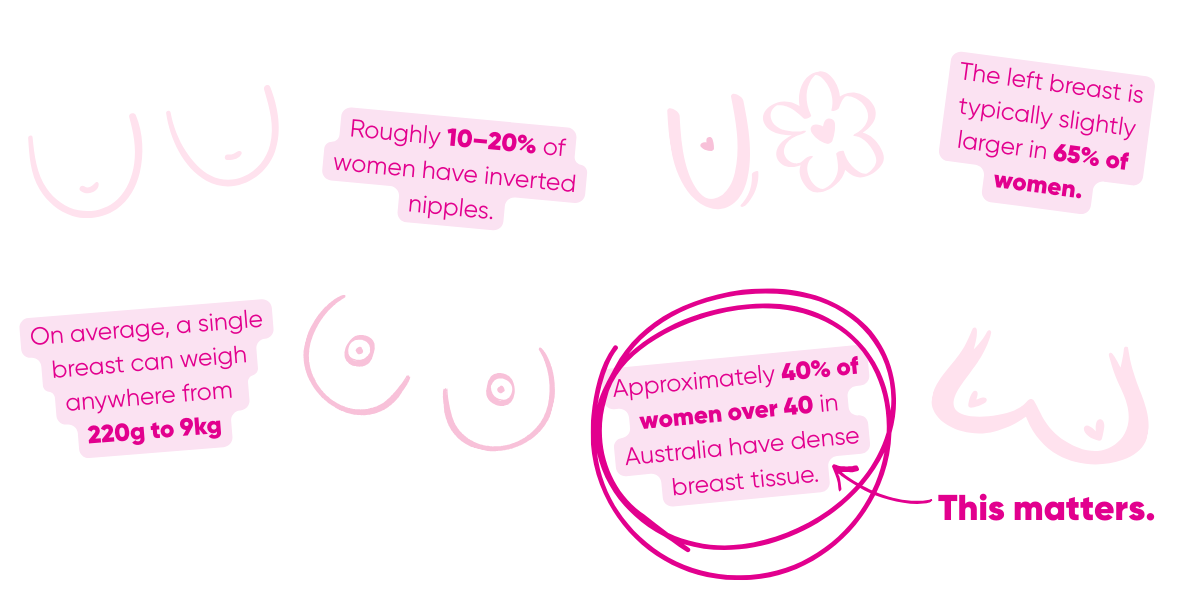
Knowing whether you have dense breast tissue is an important part of understanding your breast health and risk for breast cancer. Research shows that women with dense breasts may have a higher risk of developing breast cancer.
Breast tissue is made up of fat, glands, and fibrous (connective) tissue. When there's more glandular and fibrous tissue compared to fat, the breasts are considered dense. This is common and completely normal — but it can affect how breast cancer is detected. A screening mammogram is the most common method for determining your breast density. If however you do have “dense” breast tissue, it may be extremely difficult to spot small changes or abnormalities. In this situation, additional studies like ultrasound or MRI are strongly recommended.
If you are found to have dense breasts, your doctor may recommend additional imaging tests such as a contrast-enhanced mammogram (CEM), ultrasound or a breast MRI. These tests can help detect cancers that may be hidden in dense tissue.
The right screening approach depends on your individual risk factors, symptoms, and medical history.
If you’re unsure what’s best for you, talk to your GP. They can help you make informed decisions about your breast health.
Take charge of your health — ask your GP about your breast density today.
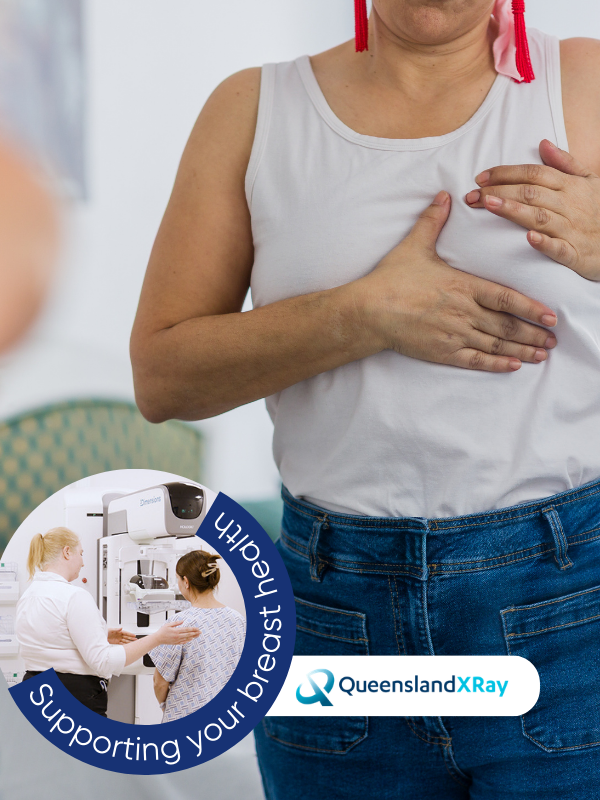

With a doctor’s referral, you can book your mammogram at Queensland X-Ray. Imaging is crucial for detecting early signs of breast cancer and monitoring breast health, particularly for women 40 years and over.
At Queensland X-Ray, 3D Mammography (also known as breast tomosynthesis) is offered as standard in all practices. A 3D mammogram is very similar to a traditional mammogram; however, it shows the breast tissue in thin ‘layers’ typically one millimetre thick. 3D imaging reduces obscuring tissue overlap and can assist in the detection of small breast cancers in comparison to traditional mammography.
Many Queensland X-Ray locations also offer contrast-enhanced mammography. Contrast-enhanced mammography increases the detection of breast cancer by identifying and characterising lesions that may not be visible on a standard mammogram. Contrast-enhanced mammography may be useful for women who have a high risk of breast cancer or women with dense breasts.
